EMPR200 Round 2 – Why do employers keep breaking safety laws?

The Ministry of Labour’s enforcement is not effective enough that employers repeatedly violate safety protections. It is found that employers were forced to fix the same hazard year after year. And only 1 percent of workplaces across Ontario are being inspected proactively to ensure a safe working environment. The violation of safety laws put employees into the risks during working.

The main reason that fails to prevent employers from continuing the same unsafe practices is although employers bear the legal responsibility for workplace safety, the bulk of the ministry’s fines go to individual workers and supervisors.  Another reason is that the ministry does not systematically target workplaces with high injury rates for inspection, leaving companies with the highest injury rates uninspected.

The Ministry of Labour’s prevention office budget dropped by $16 million last year. However, the Association of Worker’s Compensation Boards of Canada (AWCBC) reported that there are 59,529 lost-time injuries in 2017, which increase by 21% from an average of 2014-2016 rate.

The Ontario’s Occupational Health & Safety Act (OHSA) addresses the regulations that employers have responsibilities to take all reasonable precautions to protect their workers from illness and/or injury. This means that employers need to do everything they reasonably can to keep employees safe. Moreover, employees have responsibilities to follow the safety policies and ensure that procedures and measures for workplace health and safety are established. (Workplace Safety & Prevention Services) This means that both employers and employees have responsibilities in providing and maintaining safety in the workplace.

“Nobody wants to see people getting injured at work and a lot of injuries are preventable.” said by John McKinnon of the Toronto-based Injured Workers Community Legal Clinic.

Therefore, in my opinion, the prevention of injuries from the workplace is the first step that needs to be done in order to keep employees safe. Therefore, I think that governments, employers and employees all need to take greater actions in order to prevent further safety risks for workers. First of all, the government needs to put money into prevention, but also needs to lay fines targeting employers. The ministry should also improve information systems and identify workplaces for inspection where workers are more likely to get injured. The ministry should increase the number of business inspections and investigations for incidents that have occurred each year. The employer needs to provide information about the hazards in the workplace, and proper safety equipment, training and competent supervision. Lastly, employees should know the hazard in their workplace and ensure that equipment, materials and protective devices required by law and/or provided and used.

Resources:

  1. Mojtehedzadeh.S (2019) Employers keep breaking safety laws — and government enforcement isn’t stopping them, auditor general finds. Star.com
  2. Tucker.S & Keefe.A (2019) 2019 Report on Work Fatality and Injury Rates in Canada. University of Regina. Assessed from https://www.uregina.ca/business/faculty-staff/faculty/file_download/2019-Report-on-Workplace-Fatalities-and-Injuries.pdf
  3. Workplace Safety & Prevention Services. OHSA Ontario and Employers Responsibilities
EMPR 200 Round 1

U-Haul’s Free-Smoking Workplace Wellness

“Who should have to pay the cost for the most preventable cause of cancer and lung disease: employers or employees?” -Tucker Sechrest

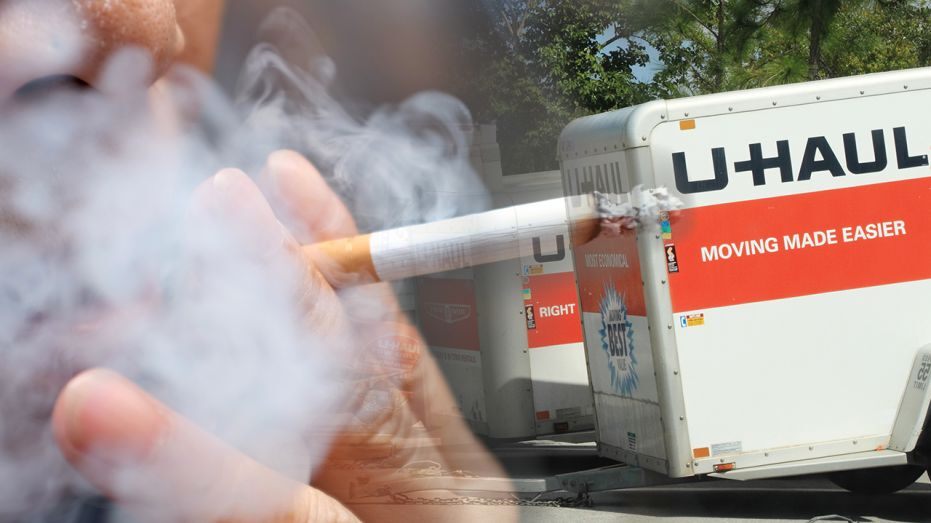
On the last day of 2019, U-Haul announced that they would not hire nicotine-used employees. This new is effective on Feb 2 in the 21 American states. In each of 21 states, it is legal not to hire nicotine users. The employees who are hired prior to that date will not be affected by this new policy.

The policy is designed to promote a healthy workplace as the U-Haul’s chief of staff, Jessica Lopez has claimed that “taking care of our team members is the primary focus and goal”.  However, the policy benefits the company as it decreases health-care costs. A recent study shows that the employees who smoke add additional costs of $6000 annually, including insurance costs, productivity lost to smoke break and increased sick time.

Many hospitals have nicotine-free hiring policy to provide a healthy environment for their patients. Alaska Airlines also banned smoking due to the difficulty of smoking on planes and airports’ surrounding areas. However, the purpose of the policy imposed by U-Haul is either not to improve customer experience or improve work performance.

Besides, the policy control people’s personal behaviours that smoked users should be responsible for their addictive habits. In essence, workers get paid by bringing value and inputs for the company, but personal lifestyles should not really be controlled by organizations. People who smoke can also work hard for the company. The addictive habit and work performance do not interfere with each other.

In additions, the policy also distorts the equality of job opportunities. A large proportion of smokers have lower education, live below the poverty line, and are unemployed. U-Haul provides a number of low wage and physical labour jobs from maintenance workers to janitors, which restricts those people who may need them most.

Though the firm hopes that its action can contribute to healthy corporate culture, it is unfair to some people who are addictive to smoke at their early age. As a study shows, 28% of adolescents smoke cigarettes in 1996-1997 and in 2018, 5% of high school adolescents reported having smoked a cigarette. Greater education investments about the harmfulness of smoking or government intervention (e.g. higher tobacco taxes) may seen as a more efficient way to encourage health and wellness. If employers really take care of employees, they should respect employees’ expressed preferences and control the work itself.

Sources:

  1. Callison.K & Kaestner. R (2012) Do Higher Tobacco Taxes Reduce Adult Smoking? New Evidence of the Effect of Recent Cigarette Tax Increases on Adult Smoking. NBER Working Paper No. 18326
  2. CDC’s Office (2019) Cigarette Smoking and Tobacco Use Among People of Low Socioeconomic Status. Centers for disease control and prevention.
  3. Lundburg. P (2007) Does smoking increase sick leave? Evidence using register data on Swedish Workers. NCBI. Retrieved from February 7, 2020.
  4. Office of Adolescent Health (2019) Adolescents and Tobacco: Trends. HHS.gov. Retrieved from February 7, 2020.
  5. Sechrest.T (2020) Workplace Wellness comes for the working class. The Atlantic. Retrieved from February 7, 2020
  6. Tahlil.T et al. (2013) The impact of education programs on smoking prevention: a randomized controlled trial among 11 to 14 year olds in Aceh, Indonesia. BMC Public Health. 2013;13:367
  7. The Associated Press (2020) U-Haul International soon won’t hire nicotine users in 21 U.S. States. CBC News. Retrieved from February 7, 2020.

My First Blog Post

Hey! I am Jingru You, and you can call me Amanda. I am a fourth year economics student in Queen’s University. and Yes, this is the last semester for me!! (I am so excited but also little scared) I take this course because it is recommended by my friend and we decided to take this course together as our electives. As I am going to graduate and enter workplace this year, I hope learning employment relation in the workplace can benefit my future career path. I am so excited about this course.

I am looking forward to working all of you!

Happy semester!

“Be you own kind of beautiful.”

 Anonymous.
Design a site like this with WordPress.com
Get started